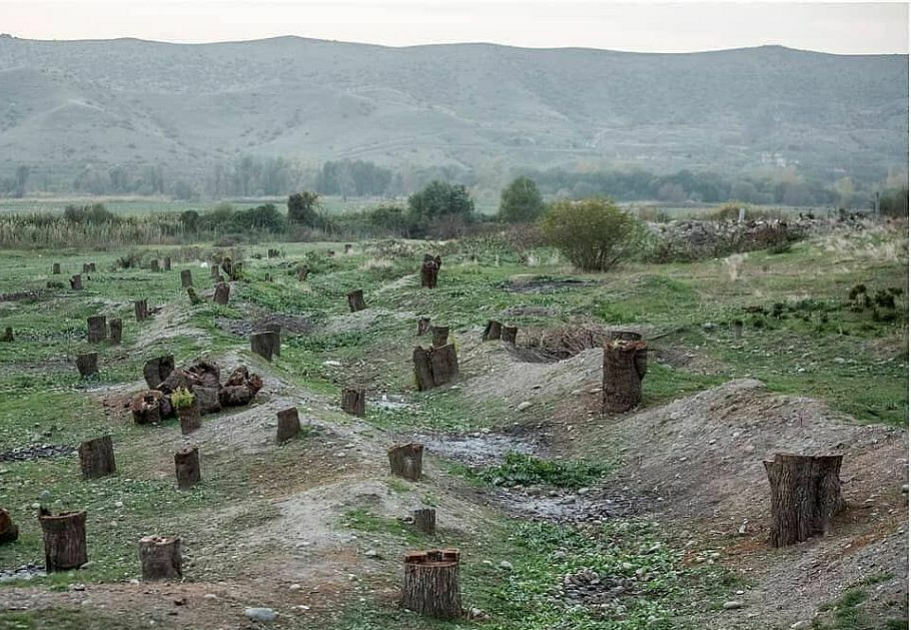
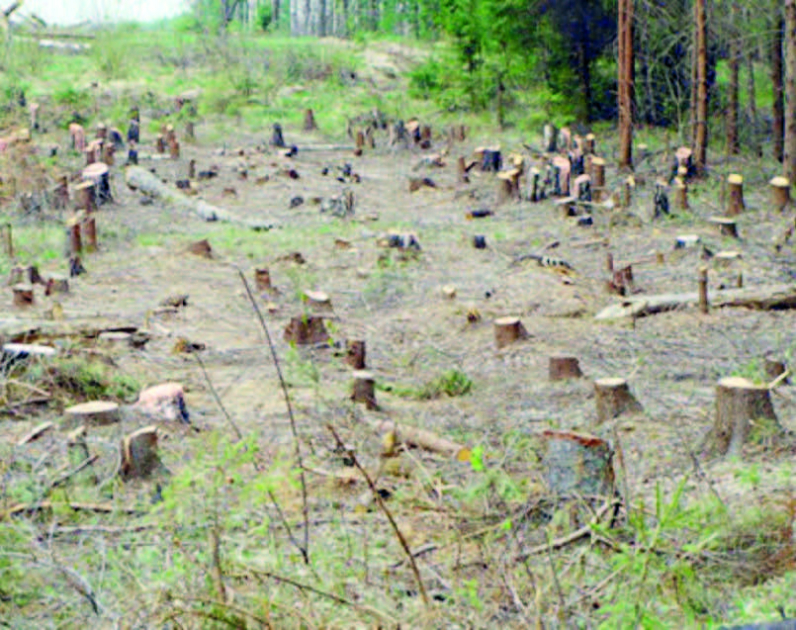
President Ilham Aliyev stated during his speech at a meeting dedicated to the State Program for the Development of the Mining and Metallurgical Industry on September 22 that, during the occupation, 60,000 hectares of forest land in the Kalbajar, Lachin and Zangilan districts had been destroyed, plundered, cut down and sold by the Armenian state.The President recalled that after the Second Karabakh War, the destruction of trees continued even during the two-to-three-week period given for the Armenian armed forces to withdraw from the Kalbajar and Lachin districts.
According to the botanical-geographical classification, fundamental floristic studies indicate that 1,316 plant species are distributed in the central part of the Lesser Caucasus, namely the mountainous part of Karabakh, while 1,250 species are found in the southern part of the Lesser Caucasus, which includes the lowland areas of Karabakh. More than 400 species of wild trees and shrubs were found in the area. Of these, 70 were endemic species that do not occur naturally anywhere else in the world.
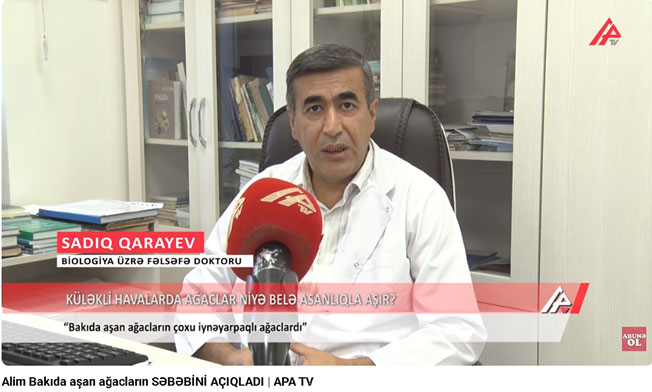
These views were expressed by Professor Sayyara Ibadullayeva, Acting Director of the Institute of Botany PLE of the Ministry of Science and Education of the Republic of Azerbaijan.
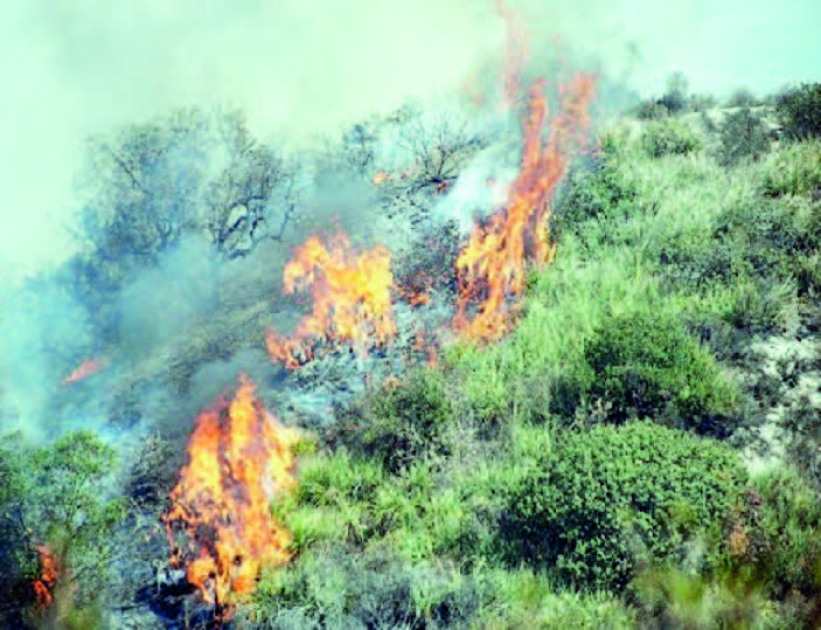
The professor noted that Karabakh's forest fund was 247,352 hectares, including 13,197.5 hectares of valuable forest areas and 152 natural monuments. During the occupation, fires set in the area caused serious damage to 986 hectares of state forest consisting of valuable tree species, 710 hectares of collective farm forests, and 560 hectares of roadside, waterside, canal-side and cultivated forests. Six Oriental plane trees (chinar) aged 150–250 years in the city of Aghdam, eight trees aged 200–250 years in Shelli, Seyidli, Sarihajili and Aliaghali, and 71 Oriental planes up to 400 years old around the village of Boyahmadli, which were protected as natural monuments and had been officially registered, were destroyed. Information on 26 percent of the forest areas of Karabakh and the territories under occupation is practically nonexistent. In addition, on 26,000 hectares of forest (in the Lachin, Kalbajar and Aghdara districts), valuable beech, linden, hornbeam, and oak trees were felled and burned, and our forests were destroyed.







1791958830.jpg)





1730190904.jpg)