During the Armenian occupation, the Garagol and Basitchay reserves were plundered. Before the occupation, Basitchay State Nature Reserve was located in the Basitchay valley in Zangilan district, with 100 hectares of it covered by plane tree forest. Our current information on how many plant species occur in the botanical-geographical regions that were under occupation, along with their population indicators and distribution ranges, is based solely on the results of the five years of expeditions (2021-2026) carried out on our lands since 2020, and these expeditions were conducted only in areas that have been cleared of mines.
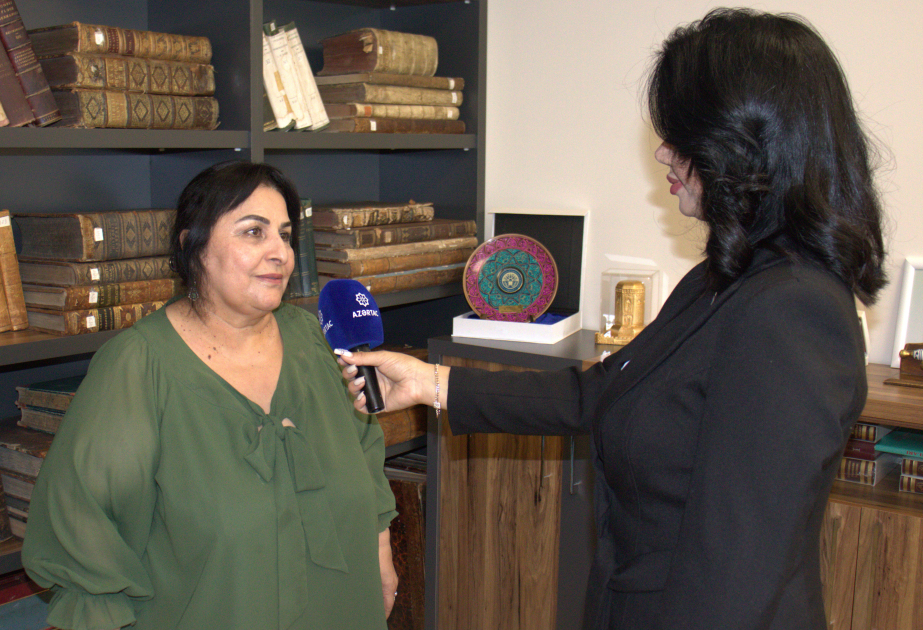
These views were expressed by Professor Sayyara Ibadullayeva, acting director of the Institute of Botany PLE of the Ministry of Science and Education, in an interview with AZERTAC.
"I should also note that our state reserves in Karabakh – Gubadli, Arazboyu, Dashalti and Lachin – have been subjected to anthropogenic factors. The Garagol State Nature Reserve covers the high-mountain areas of the Lachin district, and more than 100 plant species were protected in the area. The most memorable of the reserves is the Hajishamli forest in Lachin, where the red oak is protected. Another reserve established in the Gubadli and Lachin territory is the Gubadli State Nature Reserve, home to golden oak, walnut trees, Caucasian wingnut, maple, hawthorn, juniper and others. As for the Dashalti State Nature Reserve, which once existed in the Shusha and Khojaly area, and the Arazboyu State Nature Reserve on the Zangilan district's border with Iran, we have not yet been able to obtain any information about their current condition. Europe's only natural plane tree forest is located in the western part of the Lesser Caucasus, in the Zangilan district. It covers 117 hectares in the Basitchay valley, of which 107 hectares belong to the Basitchay State Nature Reserve. The reserve was established in 1974 on the initiative of the late academician Hasan Aliyev. The forest is 15 kilometers long and 150-200 meters wide.
"Unfortunately, this plane tree forest remained in the hands of the Armenian occupiers for 27 years. The plane trees, a legacy of centuries, were cut down and destroyed by the Armenians. They set up a timber processing plant in the area. Today, plane tree species can be found in only 5-6 hectares of the territory."